How long a shingle roof really lasts in Texas heat
The number on the packaging assumes conditions that Katy does not have.
September 8, 2026 · 3 min read
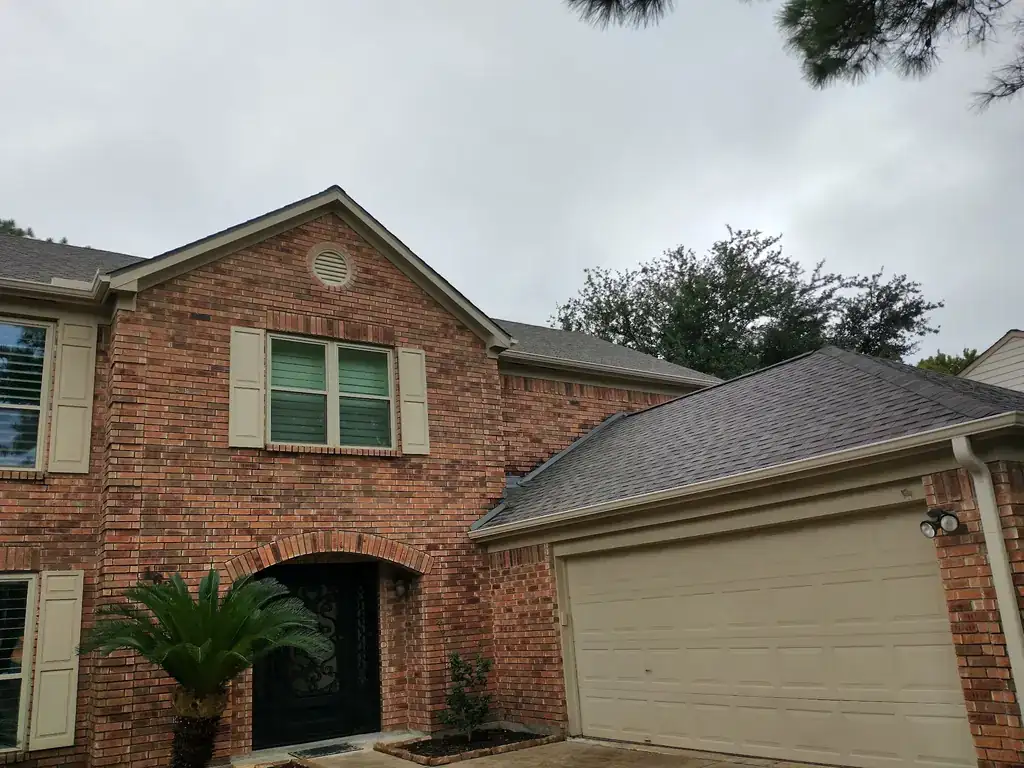
Asphalt shingles typically last somewhere between 15 and 25 years. That is a wide range, and where your roof falls in it has less to do with the brand than most people expect.
In this part of Texas, three things drive it: heat, ultraviolet exposure, and storms.
Heat is the slow one
An asphalt shingle is a mat saturated with asphalt and surfaced with mineral granules. The asphalt is what keeps water out. The granules are what protect the asphalt from the sun.
Sustained high temperatures drive the volatile oils out of the asphalt over time. As that happens the shingle gets harder and more brittle, and a brittle shingle cracks instead of flexing. On a roof deck in a Texas summer the surface temperature runs far above the air temperature, and it does that for months at a stretch.
UV is the one you can see
Ultraviolet light degrades the granule bond. Granules loosen, wash into the gutters, and leave patches of asphalt directly exposed to the sun, which then ages faster in those spots.
This is why granule loss is worth paying attention to. A handful of granules in the gutter after a new roof is installation debris and normal. Steady accumulation years later is the roof telling you where it is in its life.
Storms are the fast one
Heat and UV work on a schedule. Hail does not. A single storm can take years off a roof by bruising the mat under the surface, and bruising is often invisible from the ground and sometimes invisible from the roof to an untrained eye.
Wind is the other half of it, working on edges and ridges and lifting shingles just enough to break the seal without removing them. A roof that has been through several storms can be functionally much older than its installation date suggests.
What shortens it further
- Poor attic ventilation, which lets heat build under the deck and cooks the shingles from below
- Overhanging branches that abrade the surface and hold moisture against it
- Previous repairs done badly, especially around vents and chimneys
- Debris left in valleys, which holds water where it should be moving
Ventilation is the one homeowners have most control over and think about least. A hot attic ages a roof from the underside while the sun works on the top. Solar attic ventilation is one way to deal with it, and it is the reason attic fans come up in roofing conversations at all.
Signs it is near the end
From the ground, look for shingles that are curling at the corners or cupping in the middle, patches where the colour looks noticeably different, and any line along the roof that is no longer straight. A sagging line is a decking problem, not a shingle problem, and it is the one to call about promptly.
Inside, check the attic on a bright day. Daylight coming through anywhere it should not, staining on the underside of the decking, or a damp smell all point the same direction.
Impact resistant shingles
Given the storm exposure here, more durable materials such as impact resistant shingles are worth asking about when a roof is being replaced. They cost more up front and they are rated to take hail better, which in a region that gets hail is a reasonable trade to consider.
Whether they are right for your house depends on your roof, your budget and your insurer, some of whom price policies differently for them. That is a conversation to have during the estimate rather than a rule that applies to everyone.
The practical answer
If your roof is under ten years old and has not been through serious hail, it is probably fine and an annual look is enough. Between ten and fifteen, an annual inspection is genuinely worth booking. Past fifteen in this climate, you are in the window where planning a replacement beats reacting to a leak, and knowing that early is what lets you do it on your schedule instead of during a storm.
ProRoofs and Restoration — (281) 994-9244
Call (281) 994-9244More articles
What a roof inspection report actually contains
Most homeowners have never been shown a proper one, which is exactly why weak reports keep getting accepted.
Hail damage in Katy: what to do in the first week
Most of the mistakes that sink a hail claim happen in the first few days, before anyone has climbed on the roof.