Hail damage in Katy: what to do in the first week
Most of the mistakes that sink a hail claim happen in the first few days, before anyone has climbed on the roof.
September 8, 2026 · 3 min read
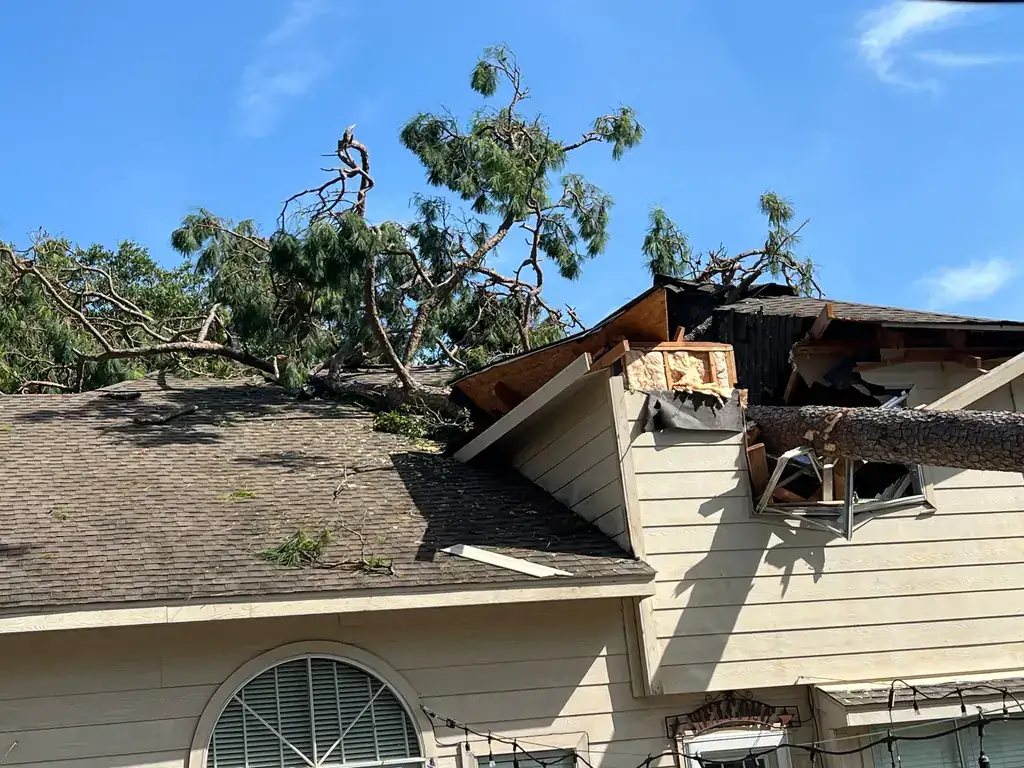
Hail moves through this part of Texas fast and leaves a neighbourhood looking mostly fine. That is the trap. Serious hail damage to a shingle roof is often invisible from the ground, and the homeowners who end up in trouble are usually the ones who looked up, saw nothing obviously broken, and got on with their week.
Here is a sequence that holds up.
Day one: write down what happened
Note the date and rough time of the storm. If you have hail still on the ground, photograph it next to something for scale, a coin or your hand. Photograph anything obviously damaged: dented gutters, a cracked window, damage to the car, anything on the ground that took a hit.
None of this is your claim. It is the timeline your claim sits on, and it takes ten minutes while you still remember it clearly.
Do not climb up there
It is tempting and it is a bad idea. Wet shingles after a storm are genuinely dangerous, and walking a hail damaged roof can add damage that is then hard to distinguish from the storm's. Fresh footfall marks on soft shingles are exactly the kind of thing that muddies a claim.
If water is actively coming in, deal with the inside. Move what you can, get a container under it, and photograph the ceiling before you clean anything up.
Get it inspected before you call the insurer
This is the step people get backwards. If you call the insurer first, an adjuster will come out, form a view, and write it down, and you will be arguing against an existing position rather than presenting one.
An inspection first gives you a documented picture of the damage, with photographs, before anyone has taken a position on it. That is a much better place to start from, and it also tells you something you need to know: whether the damage is worth claiming at all. Not every hailstorm produces a claimable roof, and finding that out early saves you a claim on your record for nothing.
Understand what your policy actually says
Two things worth knowing before the conversation. What your deductible is, because if the damage is close to it a claim may not be worth filing. And whether your policy pays replacement cost or actual cash value, because on an older roof those produce very different numbers.
Neither of these is something a contractor should be guessing at on your behalf. Read the policy or ask your agent directly.
The HOA and the permits
Around Katy, plenty of neighbourhoods have an HOA with a view on roofing materials and colours. That approval takes time, and it is much better started early than discovered late, once materials are ordered.
City permits are the same story. Neither is complicated, but both are sequential, and a job that is waiting on paperwork is a job with a tarp on it. A contractor who handles both as a matter of course is worth more than one who mentions them after the contract is signed.
Watch out for the knock at the door
After any significant hail event, crews appear that were not here the week before and will not be here next year. Some are fine. Some are not, and the ones that are not are very good at sounding urgent.
The questions that sort it out are dull ones. How long have you worked in this area. Can I see photographs of jobs you have done nearby. What warranty comes with the work, and who honours it in five years. A company with a local address and a public review history is answering those questions before you ask.
Then it moves quite fast
Once the documentation is done and the approvals are in, the physical work is not the long part. Most residential roof installations are finished in one to three days. The weeks people remember are the ones spent waiting on decisions, which is precisely why the first week is worth getting right.
ProRoofs and Restoration — (281) 994-9244
Call (281) 994-9244More articles
What a roof inspection report actually contains
Most homeowners have never been shown a proper one, which is exactly why weak reports keep getting accepted.
On Katy clay, gutters are a foundation problem
The most expensive gutter mistake in this region is sizing a system for average rainfall.